Post By
Gateway Diagnostic Imaging
Date
July 31, 2026
How Long Does a CT Scan of the Abdomen Take?
If your doctor recommends a CT scan of the abdomen, you may be wondering how much time to set aside for your appointment. Most abdominal CT scans take between 10 and 30 minutes, and the time you spend inside the scanner is often just a few minutes.
In this guide, you’ll learn what an abdominal CT is, what happens during your appointment, how to prepare and what your scan can help diagnose. Knowing what to expect can help you feel confident before your scan, and Gateway Diagnostic Imaging makes it easy to get clear answers about your health.
What Is a CT Scan of the Abdomen?
A CT scan of the abdomen, also called an “abdominal CT,” is a painless, non-invasive test that pairs X-rays with powerful computer processing to build detailed pictures of your body. The scanner captures multiple images, often referred to as “slices,” of the organs, soft tissues and blood vessels in your belly.
A computer combines those slices into detailed pictures that give your doctor a highly accurate look inside your body. Some abdominal CT scans can even be assembled into 3D visuals for even greater insight.
Because an abdominal CT scan shows bone, soft tissue and blood vessels all at once, your doctor gets a complete picture of your abdomen to pinpoint the cause of your symptoms.
How Long Does an Abdominal CT Take?
Most abdominal CT scans take between 10 and 30 minutes from start to finish. Modern CT scanners capture large sections of the body in just seconds, so you’ll typically spend only a few minutes inside the machine.
A few factors can affect the length of your CT scan appointment:
- Whether your scan uses contrast material
- The number of areas your doctor wants to image
- Whether you need to drink oral contrast, which requires arriving earlier
Be sure to plan accordingly to allow time for check-in and preparation. If your scan includes oral contrast, your imaging team will let you know exactly when to arrive.
What Happens During an Abdominal CT?
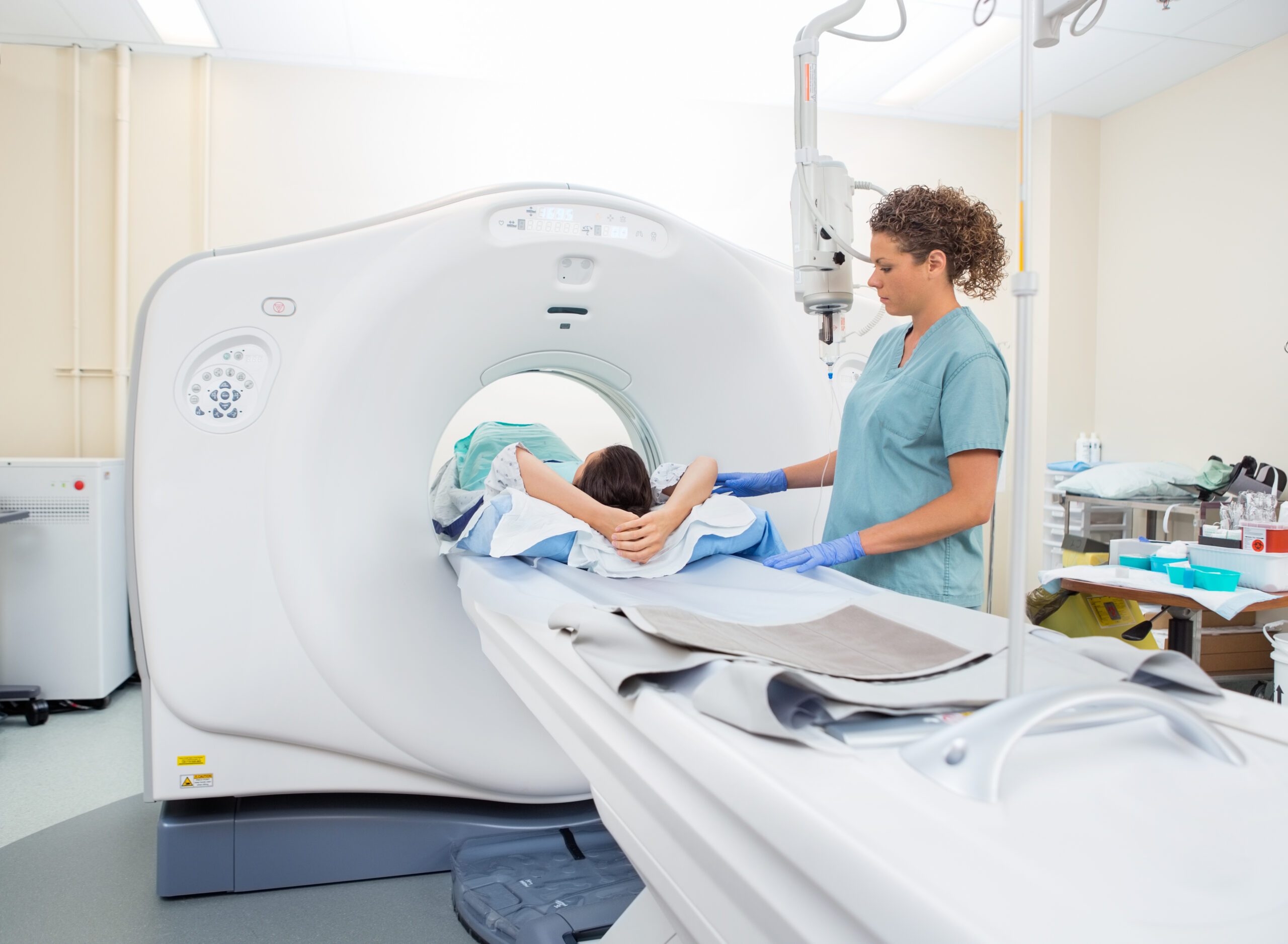
Before you get a scan of your abdomen, your technologist will help you get comfortable on a table, usually lying on your back. The table slides slowly into the CT scanner, which is a large, doughnut-shaped machine with a short tunnel in the center. The scanner’s open design and quick imaging make the experience easy for most patients, even those who feel uneasy in enclosed spaces.
As the machine captures images, you’ll be asked to lie as still as possible and may need to hold your breath for short periods. Staying still keeps your images sharp so the radiologist can read them accurately. Your technologist watches and listens from the next room throughout your scan, and a two-way intercom lets you talk with them whenever you need to.
If your scan uses IV contrast, you may feel a brief warm sensation or notice a metallic taste. Both are normal and pass quickly. The contrast highlights areas that are harder to see, giving your doctor added clarity for a more precise diagnosis.
How Should You Prepare for a CT Scan of the Abdomen?
Preparing for an abdominal CT is simple. Your imaging team will give you specific instructions for your specific scan, but the following tips apply to most appointments:
- Wear loose, comfortable clothing without metal snaps or zippers.
- Remove jewelry, glasses, belts and other metal objects that can interfere with your images.
- Follow any instructions about avoiding food or drink for a few hours beforehand.
- Bring your ID and insurance card, as well as a list of your allergies and the medications you take.
- Tell your care team if you’re pregnant, breastfeeding or have kidney problems or a known allergy to contrast dye.
Following your provider’s instructions helps your appointment stay on schedule and better ensure that your images will be clear.
What Conditions Can Be Diagnosed With a CT Scan of the Abdomen?

An abdominal CT scan gives your doctor detailed answers about a wide range of conditions. Your doctor may order imaging to detect stomach problems such as ongoing pain, bloating or digestion issues. You may also need a CT scan of the abdomen to evaluate:
- Kidney stones
- Appendicitis and diverticulitis
- Infections involving the internal organs
- Inflammatory bowel disease, such as Crohn’s disease or ulcerative colitis
- Masses and tumors, including cancer
- Blood vessel concerns, such as blockages or aneurysms
- The cause of unexplained symptoms like fever, swelling or abnormal blood test results
Getting clear answers about what’s causing your symptoms is the first step toward starting on the best treatment plan.
Schedule Your Abdominal CT Scan With Gateway Diagnostic Imaging
Gateway Diagnostic Imaging brings state-of-the-art CT technology to 13 locations across the Dallas-Fort Worth metroplex and Abilene, Texas. Our centers are accredited by the Intersocietal Accreditation Commission, which is a reflection of our commitment to quality, safety and patient care.
We’re in-network with all major insurance plans and accept CareCredit®. Our patients save up to 93% compared to hospital imaging and receive one simple bill for all services. With appointments available within 24 hours, plus extended hours and weekend availability, it’s easy to take the next step in your care.
Learn more about CT Scans in the Dallas-Fort Worth area and schedule your abdominal CT with Gateway Diagnostic Imaging today.
Frequently Asked Questions About CT Scans of the Abdomen
Do You Need Contrast Dye for Abdominal CT?
Some abdominal CT scans use contrast material, but not all do. Contrast makes certain structures stand out that would otherwise be tough to see, sharpening your images and giving your doctor greater insight. Your healthcare provider will let you know if your scan requires contrast.
Are You Sedated for a CT Scan of the Abdomen?
You’re awake during an abdominal CT, and sedation isn’t needed for this quick, painless exam. CT scanners are more open and faster than other imaging machines, which makes the experience comfortable for most patients, including those with claustrophobia. If you feel anxious about your scan, talk with your healthcare provider before your appointment about options to help you relax.
How Long Does It Take To Get CT Scan Results?
After your scan, a radiologist reviews your images and sends an official report to the doctor who ordered your exam. You’ll also receive a text message with a link to an easy-to-read version of the report. It includes interactive diagrams and explains unfamiliar medical terms and phrases.
Can You Eat or Drink Before a CT Scan?
For some abdominal CT scans, especially those with contrast, you may need to skip food and any drinks other than water for a few hours beforehand. Your healthcare provider and imaging team will give you specific instructions when you schedule your CT.
How Long Does an Abdominal CT Scan Take?
Most abdominal CT scan appointments take 10 to 30 minutes, but the actual imaging takes just a few minutes. If your scan includes oral contrast, your imaging team will ask you to arrive a bit earlier, so be sure to plan accordingly.
Where Are Gateway Diagnostic Imaging Centers Located?
You’ll find Gateway Diagnostic Imaging at 13 locations spread across the Dallas-Fort Worth area and Abilene, TX.
