Post By
Gateway Diagnostic Imaging
Date
August 14, 2026
How To Prepare for a Lung Cancer Screening Appointment
If you smoke or smoked for many years, your doctor may recommend lung cancer screening to check your lungs before any symptoms appear. Preparing for a lung cancer screening is simple. You don’t need to fast or adjust your medications, and there are no needles or contrast dye involved. Just wear comfortable, metal-free clothing, bring your photo ID and insurance card and arrive about 15 minutes early to check in.
In this guide, you’ll learn who qualifies for a low-dose CT lung cancer screening, how to get ready for your appointment and what to expect on the day of your scan. Knowing what’s ahead can help you walk in feeling calm and confident.
What Is Lung Cancer Screening?
Lung cancer screening is a preventive exam that checks your lungs for early signs of cancer before symptoms develop. The screening uses a low-dose CT scan, sometimes shortened to “LDCT,” to capture detailed pictures of your lungs in just a few minutes. The scan is quick, painless and non-invasive.
Low Radiation Exposure During Screening
A low-dose CT scan gets its name from the lower amount of radiation it uses. The exam is designed to use up to 90% less radiation than a standard chest CT, while still producing clear, detailed images of your lungs. This lower dose helps keep radiation exposure to a minimum, which is especially important because eligible patients are typically screened once a year.
What Is the Purpose of a Low-Dose CT Lung Cancer Screening?
The purpose of a low-dose CT lung cancer screening is to find lung cancer at its earliest and most treatable stage in people who have a higher risk of developing the disease. A low-dose CT scan can reveal small lung nodules and other changes that a standard chest X-ray may miss, giving you and your doctor the chance to act at the earliest possible stage.
The scanner captures multiple pictures, or “slices,” of your lungs, and a computer combines them into detailed 2D and 3D images for your radiologist to examine. That level of detail helps your care team spot nodules while they’re still small, when you have the most options for follow-up care.
Is Lung Cancer Screening Right for You?
Low-dose CT lung cancer screening is recommended for adults who have a higher risk of developing lung cancer. You may be a candidate for annual screening if you:
- Are between 50 and 77 years old; and
- Currently smoke or quit smoking within the past 15 years; and
- Have a smoking history of at least 20 pack-years; and
- Do not have current signs or symptoms of lung cancer
A “pack-year” means you smoked one pack of cigarettes a day for one year. Smoking one pack a day for 20 years or two packs a day for 10 years both add up to 20 pack-years.
If you’re not sure whether you qualify for lung cancer screening, talk with your healthcare provider. They can review your health history and help you decide whether screening is the right proactive step for you.
How Should You Prepare for a Lung Cancer Screening?
Preparing for a lung cancer screening starts with having a conversation with your healthcare provider. A physician’s order is required before your CT scan appointment, so ask your provider for a referral if you meet the screening guidelines. Once you have your order, scheduling is easy, and same-day and next-day appointments are often available.
Before the day of your scan, gather a few essentials:
- Your photo ID and insurance card
- Records of any previous chest imaging or CT scans
- A list of your current medications and health conditions
Plan to wear comfortable, loose-fitting clothing without metal zippers, snaps or large buttons, and leave necklaces and large jewelry at home.
Follow Instructions for Food, Drinks and Medications
One of the best parts of preparing for a low-dose CT lung cancer screening is how little you have to change about your day. You can eat and drink normally, since no fasting is required. You can also take your usual medications unless your provider tells you otherwise. Because the scan doesn’t use contrast dye, there’s no IV to place and no special preparation you need to follow beforehand.
Tell the Imaging Center About Health or Accessibility Needs
When you schedule your lung cancer screening appointment, let the imaging center know about any health concerns or accommodations the team should prepare for. Tell the team if you’re pregnant or think you might be pregnant, or if you’ve recently had a respiratory infection, since illness can affect how your images appear.
You should also mention any mobility needs or scheduling conflicts in advance. Sharing these details early gives your imaging team time to make your appointment as smooth and comfortable as possible.
What Should You Expect During a Lung Cancer Screening Appointment?
Your lung cancer screening appointment is quick and routine. Here’s a step-by-step look at what happens from the moment you arrive until your scan is complete.
Check In and Prepare for the Low-Dose CT Scan
Plan to arrive about 15 minutes early to complete check-in. During this part of your visit, you may:
- Complete or confirm your registration paperwork
- Provide your photo ID and insurance card
- Tell the imaging team about recent illnesses or a possible pregnancy
- Ask any last-minute questions about your scan
Before your scan, you’ll remove any metal objects that could interfere with your images. These may include jewelry, glasses, hairpins, hearing aids, watches and belts. Patients who arrive in suitable metal-free clothing may not always need to change into a gown, depending on the imaging center’s procedures.
These steps are all routine, and your imaging team will make sure you feel informed and at ease before your scan begins.
Get Positioned on the CT Table
Once you’re ready, your technologist will help you lie flat on your back on the cushioned CT table. You’ll typically raise your arms above your head, and your technologist may use cushions or supports to help you stay comfortable and still.
The table then moves slowly through the scanner while it captures images of your lungs. CT scanners are open and ring-shaped, like a large doughnut, so you’re never placed inside a long, enclosed tunnel. Your technologist steps into the next room during the scan, but they can see, hear and speak with you the entire time.
Follow Your Technologist’s Breathing Instructions
During the scan, your technologist will ask you to hold your breath for a few seconds. This brief pause keeps your lungs still so the scanner can capture the sharpest possible images.
You may hear whirring or knocking sounds as the machine works, which is completely normal. Lying still and following the breathing cues are the only things you need to do, and your technologist will guide you through each step.
How Long Does a Low-Dose CT Scan Take?
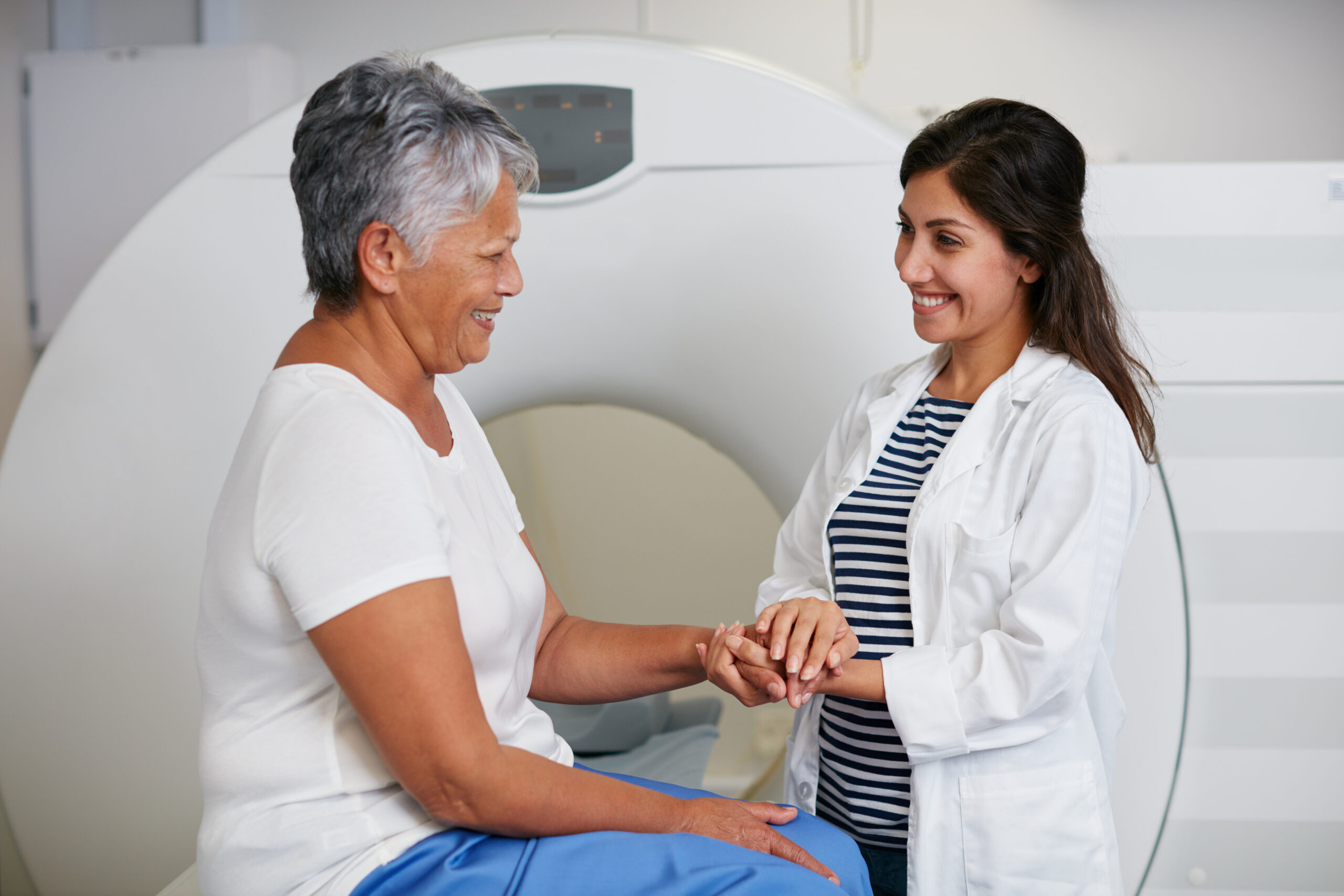
The low-dose CT scan takes only a few minutes, and the scanner captures your images in a matter of seconds. Including registration and preparation, most lung cancer screening appointments are completed in about 30 minutes or less.
What Should You Expect After a Lung Cancer Screening?
The screening itself is only the first step toward getting answers about your lung health. Here’s what happens once your images are captured.
Getting Your Results
After your scan, a radiologist reviews the CT images and prepares a report describing the findings. The report is typically sent to the healthcare provider who ordered the screening.
Depending on the imaging center, you may also receive the results through a patient portal, by phone or through another secure method. The timing and process can vary, so ask the imaging center when and how you should expect to receive your results.
Talking With Your Doctor About Next Steps
Your healthcare provider will review the radiologist’s findings with you and explain what they mean for your care. If your scan shows no concerning findings, your provider will likely recommend returning for another screening in 12 months as long as you continue to meet eligibility guidelines.
If your radiologist identifies something that needs a closer look, your provider may recommend a follow-up low-dose CT scan or additional imaging. Whatever your results show, annual screening gives you and your doctor a reliable way to stay ahead of your lung health.
How Are Lung Cancer Screening Results Explained?
After your scan, your radiologist assigns a Lung-RADS score, which stands for “Lung Imaging Reporting and Data System.” This standardized score, ranging from 0 to 4, summarizes what the radiologist found and helps your care team decide on the next steps of your care.
A Lung-RADS score is not a cancer diagnosis. Here’s a quick look at what each result means:
- Score 1 or 2: No concerning nodules were found, and you’ll continue with annual screening.
- Score 3 or 4: A finding needs closer follow-up. Your provider may recommend a repeat scan in three to six months or additional imaging.
- Score 0: More information is needed. You may repeat the scan in one to three months, often because prior images weren’t available or a recent infection needs time to clear.
Finding a lung nodule is common, and many nodules turn out to be harmless. Your radiologist tracks any nodules over time, comparing new images with earlier scans to confirm they’re stable. This is why some patients return sooner than one year and why sharing prior imaging records with your imaging center is so helpful.
Schedule Your Lung Cancer Screening With Gateway Diagnostic Imaging
Getting reliable information about your lung health begins with high-quality imaging. Gateway Diagnostic Imaging offers low-dose CT lung cancer screening at 13 state-of-the-art locations across the Dallas-Fort Worth metroplex and Abilene, Texas. A board-certified, subspecialized radiologist reads every scan, and patients save up to 93% compared to hospital imaging.
We’re in-network with all major insurance plans, accept CareCredit® and provide one simple bill for all services. With same-day appointments, extended hours and weekend availability, scheduling your screening is easy.
Schedule an appointment for your lung cancer screening in the Dallas-Fort Worth area with Gateway Diagnostic Imaging today.
Frequently Asked Questions About Lung Cancer Screening
Do You Need a Referral for Lung Cancer Screening?
A physician’s order is required before your lung cancer screening appointment. Talk with your healthcare provider about your smoking history and risk factors. If you meet the screening guidelines, they can send a referral to Gateway Diagnostic Imaging.
Can You Eat or Drink Before a Lung Cancer Screening?
You can eat and drink normally before your appointment. A low-dose CT lung cancer screening doesn’t use contrast dye, so you won’t have to fast or follow any special preparation.
Can You Take Your Usual Medications Before Lung Cancer Screening?
You can take your medications as you normally would, unless your healthcare provider gives you different instructions. Bring a list of your current medications so your imaging team has your complete health picture.
Do You Need a Ride Home After Your Lung Cancer Screening?
You can drive yourself home after your lung cancer screening. The exam doesn’t require sedation, so you can return to your normal activities immediately after your appointment.
What Should You Do If You Get Sick Before Your Lung Cancer Screening?
Call the imaging center if you develop a respiratory infection or another illness before your appointment. Infections and inflammation can affect how your images appear, so your imaging team may recommend rescheduling your scan once you’ve recovered.
Where Are Gateway Diagnostic Imaging Centers Located?
Gateway Diagnostic Imaging offers low-dose CT lung cancer screening at 13 convenient locations across the Dallas-Fort Worth metroplex and Abilene, Texas. Same-day appointments, extended hours and weekend availability make it easy to schedule your screening.
